Concept Rendering
Platinum Double Shank
From the Strata Gems Collection
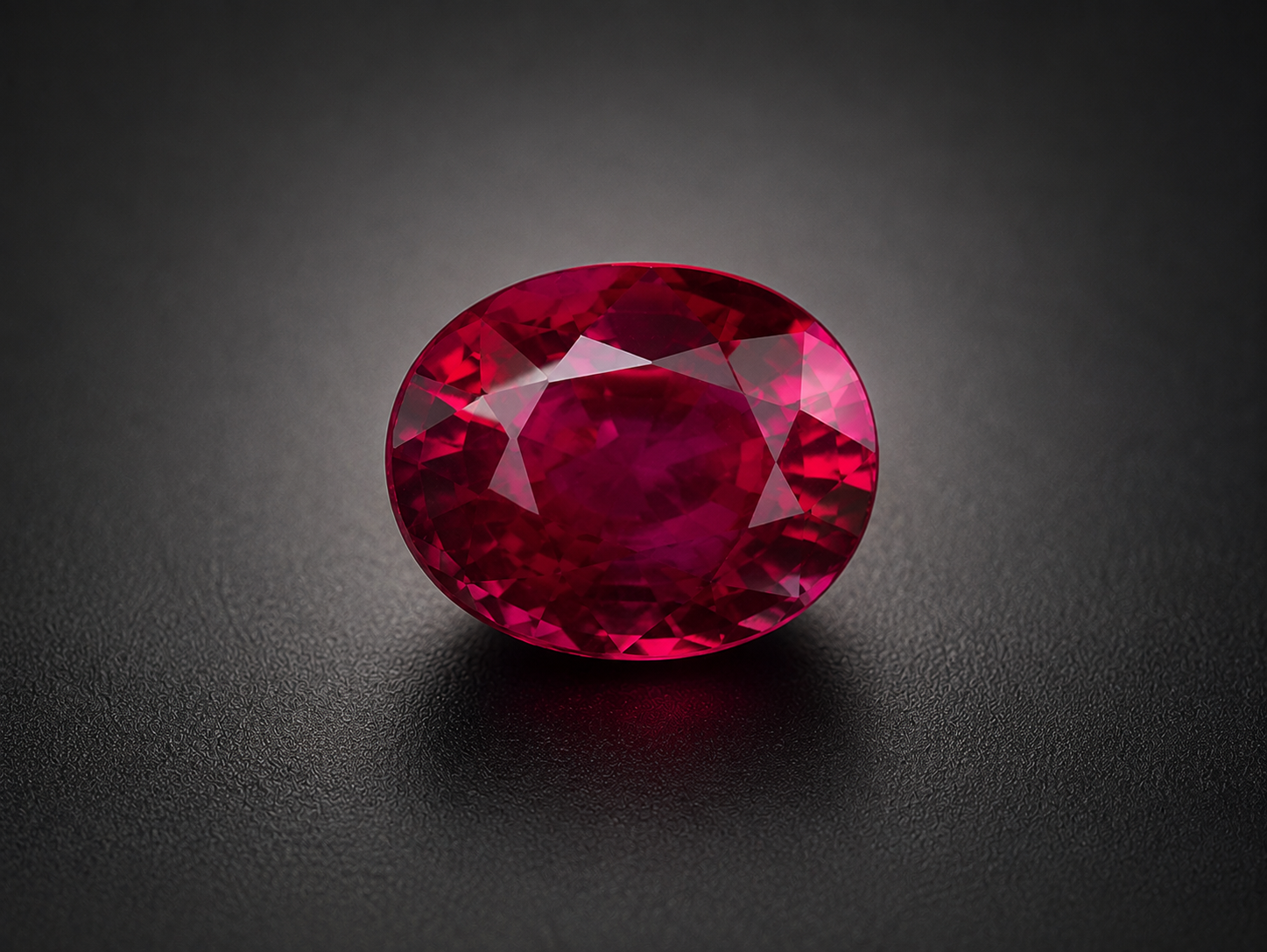
Featured Gemstone
2.16 ct Burmese Ruby
GRS-type “Pigeon’s Blood”
This natural Burmese ruby combines vivid red color with the depth and character that make fine ruby so compelling. Its laboratory report documents Burmese origin and the highly sought-after GRS-type “Pigeon’s Blood” color designation.
The report supports the gemstone’s identity and treatment disclosure, but the character of the stone is best understood through direct viewing, movement and changing light.
Weight
2.16 carats
Dimensions
8.12 × 7.02 × 4.86 mm
Shape
Oval
Cut
Brilliant / Step (4)
Origin
Burma (Myanmar)
Comment
H(a)
Collector's Note
<1%
Of all rubies possess the characteristics associated with the coveted “Pigeon’s Blood” designation.
Sotheby’s describes Pigeon’s Blood rubies as representing fewer than one percent of all rubies. This ruby has received the GRS-type “Pigeon’s Blood” color designation, recognizing its vivid red appearance within one of the most sought-after categories of natural ruby.
Source: Sotheby’s
Photography note: Every effort has been made to represent this ruby
accurately. Fine colored gemstones can appear different according to lighting,
viewing angle and display settings. In person, the stone exhibits greater
movement, depth and character than a single photograph can fully capture.
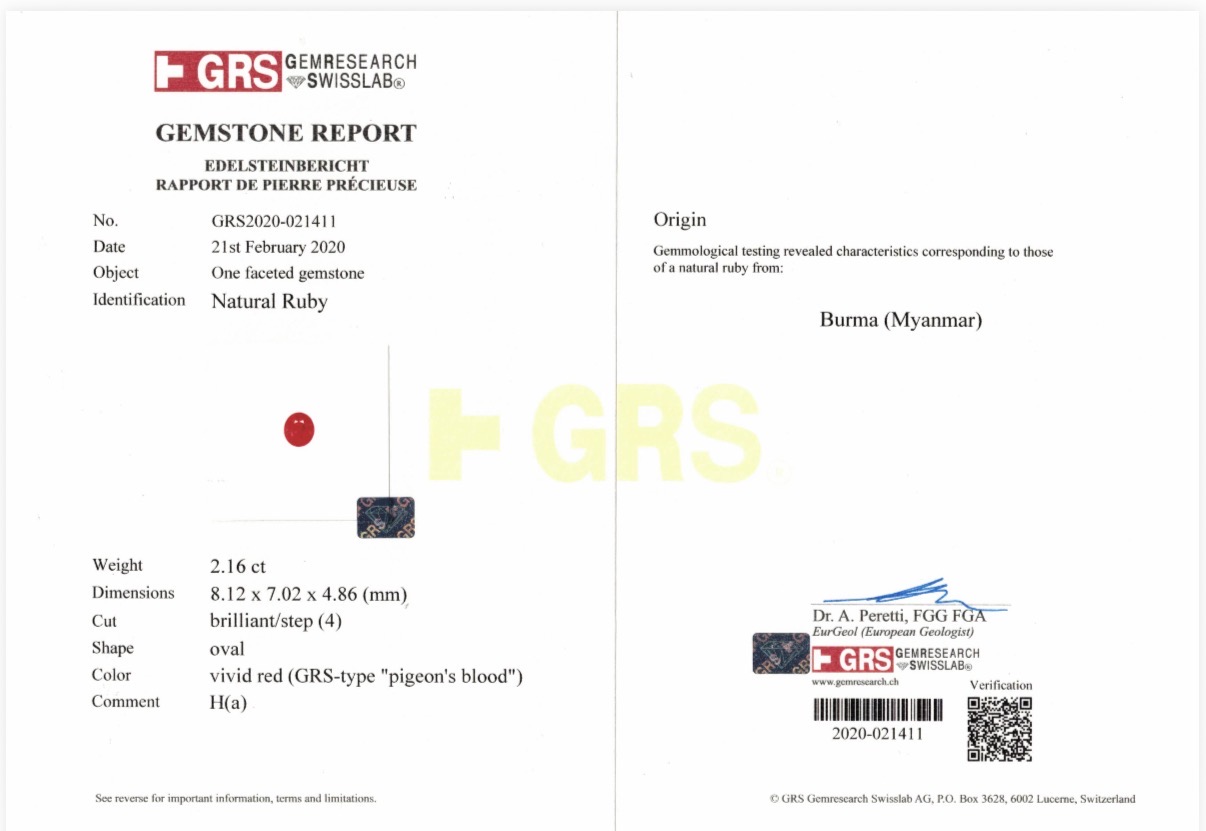
GRS Gemstone Report
Natural ruby documented as originating from Burma
(Myanmar), with vivid red GRS-type “Pigeon’s Blood”
color and H(a) comment.
A Curator's Perspective
Why I Chose This Ruby
This ruby captured my attention long before I ever saw its laboratory report. Its color, presence, and character immediately distinguished it from the many stones I had examined.
Laboratory reports are essential—they confirm identity, origin, and treatment—but they do not determine beauty. That judgment comes only through careful observation, experience, and seeing a gemstone in motion under changing light.
This Burmese ruby remains part of my personal collection because it represents the standards I strive to uphold at Strata Gems: exceptional gemstones, complete transparency, and an appreciation for beauty that extends beyond the report.
Bill Hoffer
Founder • Strata Gems
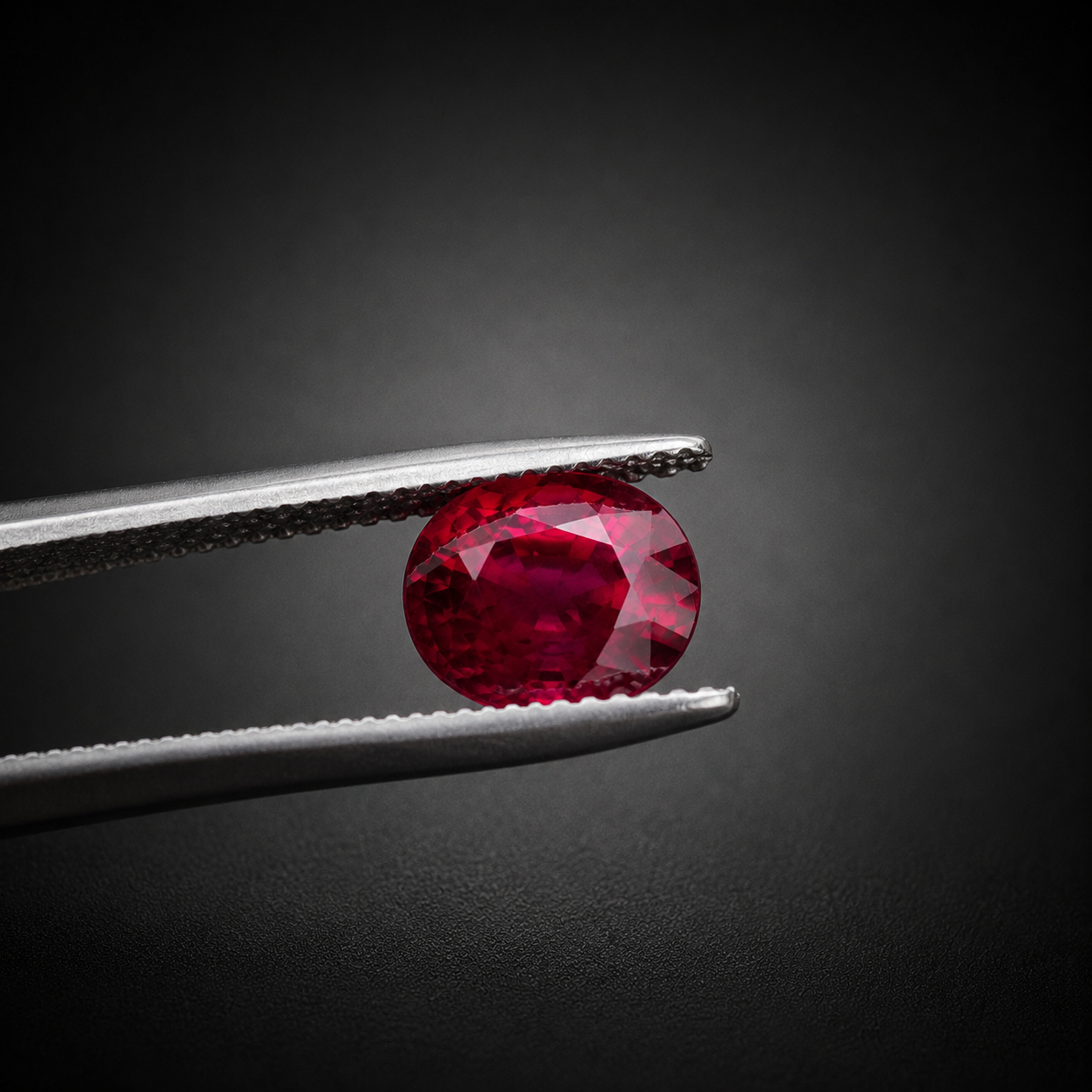
Personal examination of the featured 2.16 ct Burmese ruby
Custom Jewelry
Design Possibilities
Concept renderings illustrate how the featured ruby may be interpreted in different metals and setting styles. Final proportions are developed around the gemstone and the individual who will wear it.
Concept Rendering
Yellow Gold Solitaire
Concept Rendering
Modern Bezel
Concept imagery is illustrative and does not represent completed jewelry.
Light Reveals Character
Fluorescence
Many rubies respond to ultraviolet light with a vivid red glow. This fluorescence is produced primarily by chromium within the crystal structure and can contribute to the lively appearance associated with fine ruby.
Burmese rubies are often admired for strong fluorescence because their geological environment may contain relatively low levels of iron, which can otherwise suppress the reaction.
Fluorescence is only one part of evaluation. It does not, by itself, establish origin, treatment, quality or value. Those conclusions require examination of the complete gemstone together with independent laboratory findings.
Illumination
365 nm ultraviolet light
Observed Reaction
Strong red fluorescence
Documentation note:
This image records the featured ruby under controlled 365 nm
ultraviolet illumination. UV photographs are educational views
and should not be interpreted as a substitute for a laboratory report.
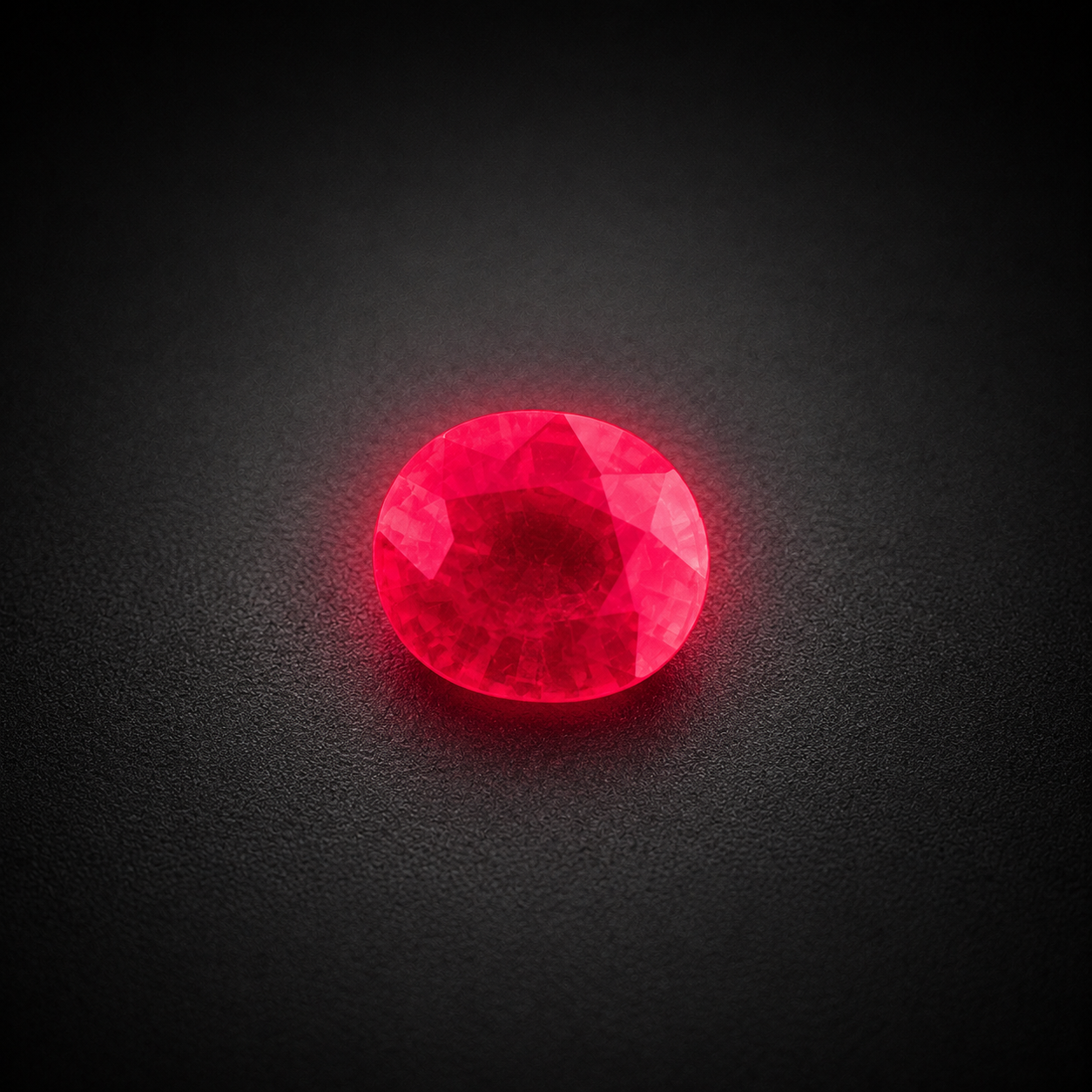
Featured ruby under 365 nm ultraviolet illumination
The Elements of Evaluation
Understanding Ruby
No single characteristic defines an exceptional ruby. Color, origin, clarity, treatment, fluorescence and rarity must be considered together to understand the gemstone as a whole.
01
Color
Color is the most influential factor in ruby evaluation. Fine examples display a vivid and balanced red, with enough saturation to feel rich without becoming excessively dark. The finest color should remain compelling as lighting and viewing angle change.
C
02
Origin
Burma, now Myanmar, has produced many historically important rubies, while Mozambique has become a major modern source of fine material. Origin can influence rarity and market perception, but it should never replace a careful evaluation of the individual gemstone.
O
03
Clarity
Natural rubies commonly contain internal features. Their location, visibility and effect on durability matter more than whether the stone is perfectly clean. Certain inclusions can also provide valuable evidence of natural formation and geological history.
Cl
04
Treatment
Heat treatment is the most widely accepted enhancement in ruby and has been practiced for centuries to improve color and clarity. However, untreated rubies displaying exceptional color are among the rarest and most highly prized gemstones. More significant treatments—including glass filling, fracture filling, and diffusion—can substantially affect durability, rarity, and value, making accurate disclosure essential.
T
05
Fluorescence
Chromium may cause ruby to emit a vivid red glow under ultraviolet light. This reaction can contribute to the lively appearance of some rubies in daylight, although fluorescence alone does not determine quality or value.
F
06
Rarity & Value
Fine ruby becomes increasingly scarce as size rises. Exceptional color, transparency, attractive proportions, limited treatment and respected laboratory documentation can combine to create one of the rarest and most valuable categories of colored gemstone.
V
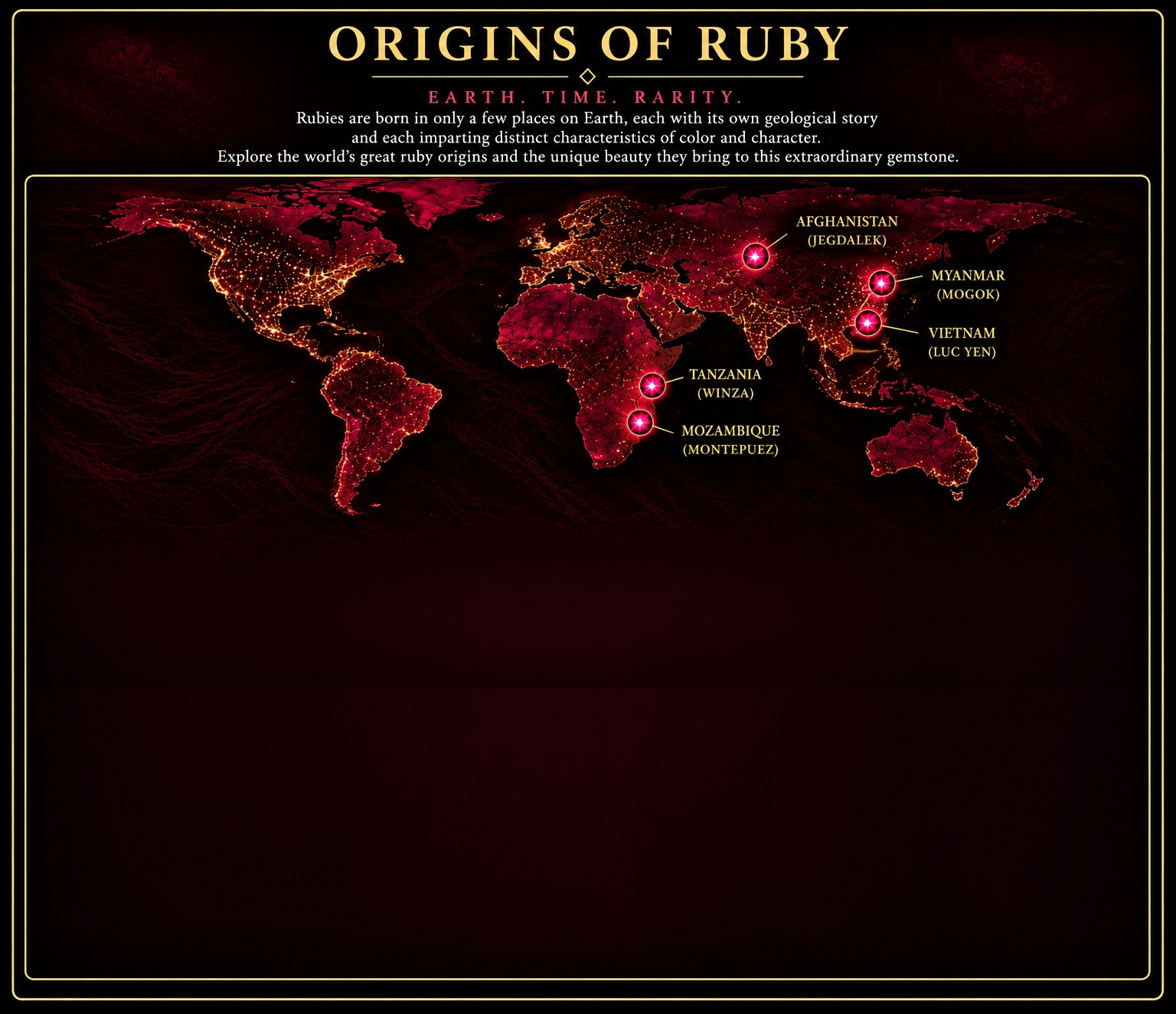
World Origins
Origins of Ruby
Legendary Localities · Historic Deposits · Modern Discoveries
Ruby occurs in important deposits across Asia and East Africa. Each locality adds geological and historical context, but the individual gemstone must always be judged on its own visible beauty, treatment and documentation.
Myanmar
| Mogok
Legendary Historic Origin
Myanmar rubys are among the rarest and most celebrated colored gemstones.